
Vinyl plank or laminate, which way do you lean? Nowadays, they are both durable, easy to install, and quite often, they are also nearly waterproof. So how do you know which one is right for you? Is it a matter of cost? Or maybe you have a high-moisture room that needs flooring, but tile is not your style. Let’s dive into what you need to know about these two types of floors.
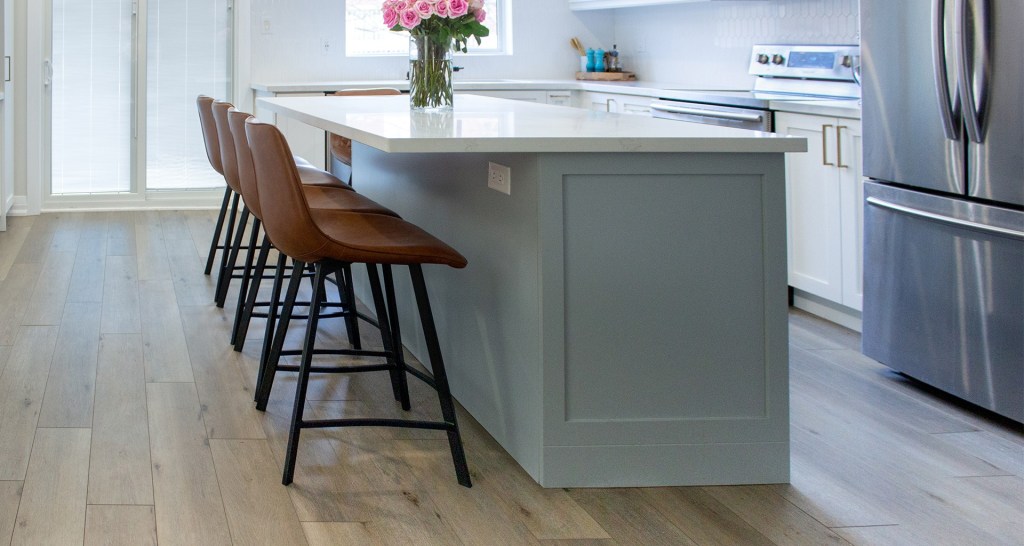
First of all, what is vinyl plank?
According to Richmond Flooring, Vinyl plank ” is a multi-layer construction flooring material with PVC as the core material. It has a decorative layer that can mimic the look of hardwood but is 100% waterproof. The product is then finished with a protective anti-wear clear topcoat to give it durability.” https://www.richmondflooring.ca/en/discover/topic/ric-faq-pk#anc-vinyl
In a nutshell, Vinyl plank is waterproof, easy to clean, easy to install, and holds up to everyday life. Stylistically, there are 100’s of vinyl plank colours, patterns, and textures, in both wood and tile looks. Because it’s not a natural product, you risk repeating the pattern every so often, though most manufacturers have tried to combat this by having at least six different patterns in any one style. It is important to protect your floor using many different tools. Felt pads for under furniture, mats by entrances (don’t use rubber mats, because they can cause fading and discolouration), and proper cleaners that are meant for vinyl flooring. Vinyl plank also tends to be a cheaper option. Keep in mind though, as the cost goes down, so does the quality. Our vinyl plank ranges in price from $3.89/sf – $6.29/sf.
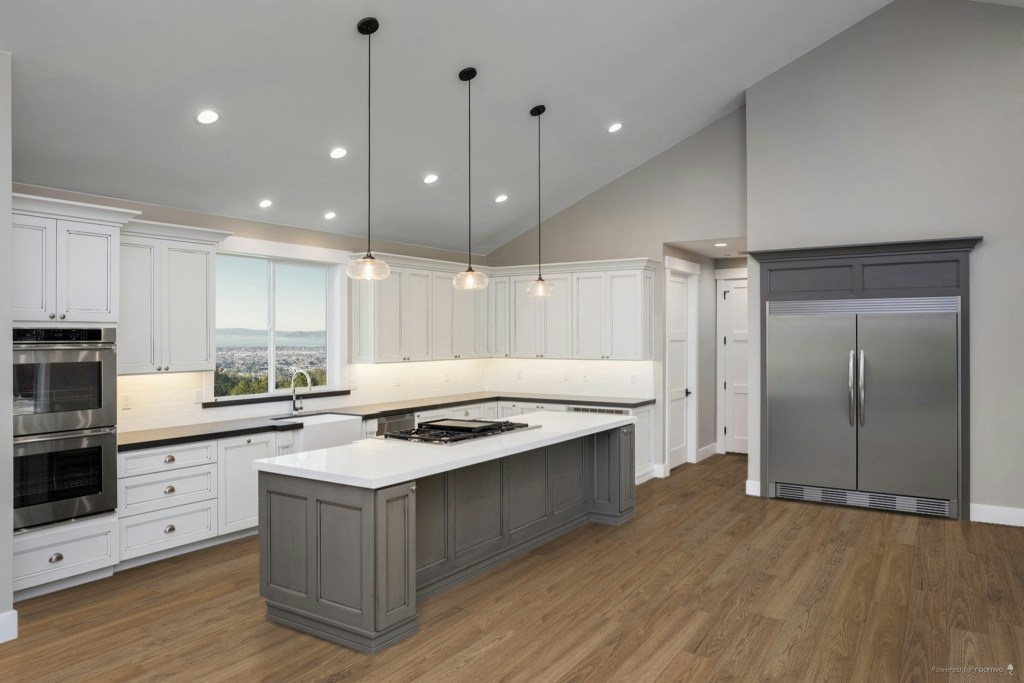
And What is laminate?
“Laminate flooring is a highly durable wood-based product that consists of multiple layers that are laminated together. The layers include:
- High-Density Fiberboard core which provides rigidity, dent resistance
- Decorative layer which features real wood-like patterns
- Anti-wear Protective top layer which is scratch and scuff resistant.
Laminate comes in standard and waterproof options with a beautiful wood look. It is easy to install and can be used in residential and commercial applications. ” https://www.richmondflooring.ca/en/discover/topic/ric-faq-pk#anc-laminate
Many laminate products nowadays also have an embossed wear layer, to enhance the real wood feel. In the same way as vinyl plank, laminate manufacturers also aim to please with different patterns to avoid repeats. In my opinion, laminate will always look more natural than vinyl plank, and I think that is partially because it is a wood composite product. This also means that as much as manufacturers promise that laminate is waterproof, no laminate will be fully waterproof. Nowadays, almost all laminates are surface waterproof, or water resistant, and some are even steam mop approved. But, If your home was to flood, your laminate would be damaged. That being said, unless a specific area of your home has a history of flooding or high moisture content, laminate is a perfect choice. It is extremely durable.
We know a woman who had high quality laminate in her home for over 12 years and replaced her floor only recently because her style has changed and she wanted a new colour. It was still in almost brand-new shape after that long. Isn’t that truly impressive? Laminate is also much warmer underfoot than most other floors, including vinyl plank. On the other hand, the wear layer and printed design on cheap laminate (like the $1.99 stuff from Big Box stores) will often peel up and chip under moving furniture such as kitchen chairs. We will always recommend felt pads under all of your furniture to prevent this, but your higher-quality laminate will be all the tougher to start out with. We only carry high quality laminate ranging in price from $3.89/sf – $5.89/sf
So we have just talked about how vinyl plank and laminate are different, but how are they similar?
- Both need a completely level subfloor to be installed properly. With vinyl plank and thinner laminate, you risk snapping the end joints if there are any dips in your floors, and with thicker laminate, you risk feeling soft spots and hearing hollow spots when you step on a dip. Your floor will deteriorate much quicker if it is moving up and down with rolls and dips all the time.
- Neither is completely recyclable, though laminate is significantly closer to being fully recyclable. Because vinyl plank is a PVC product, even when it breaks down, it turns into microplastics which can take hundreds of years to decompose, if at all. Laminate however has been developed so now it is approximately 85% recyclable. The laminate coating prevents laminate from being fully recyclable, but it can be repurposed in the form of wood chips or fibers.
- Both are designed to mimic real wood, so they abide by the same wood design rules. Wood shouldn’t butt up against existing wood, it just looks off. And Wood in the bathroom is a distinctly farmhouse look, so if you choose to lay the same flooring all throughout your house, make sure that your homes style matches that farmhouse feel. So many people have tried to turn their homes into farmhouses, that the trend is rapidly going out of fashion.
- Both are suitable for the kitchen and entrance ways, you simply need to protect your floors. Using entrance mats, and felt pads, and ensuring that you clean up any spilled water, mud that is tracked in, or other liquids, will all increase the life of your floors.
- Finally, both are DIY-friendly, while there are specific cutting tools for laminate, a table or chop saw works just fine. The installation instructions are readily available online, on YouTube, and usually in the boxes themselves. Because both are floating, you don’t need any messy glues or adhesives. Both use user-friendly underlays, whether they are attached to the plank or on a separate roll.
In conclusion, vinyl plank and laminate are both fantastic floating floors that are good for different areas in your home. Both are great for DIYers, and both can fit within almost any budget. They are similar products, but not the same. Where vinyl plank is more waterproof, laminate is more comfortable.
So if your question is “Which is better?” the answer is, What matters most to you? Where do your priorities lie? What does your space require? Based on this article, I hope that the answer will become clear to you. But if you still have questions, or need to know your next steps in a floor renovation project, come on into our store and meet with one of our flooring specialists. We’d love to discuss what’s under your feet!
 What's Under Your Feet?