
We have gotten this question more than once, so if you think the answer is a no-brainer, think again. Whether you want to put flooring in your new home, or simply refresh your space, vinyl plank is a great product. But can it go in a kitchen?
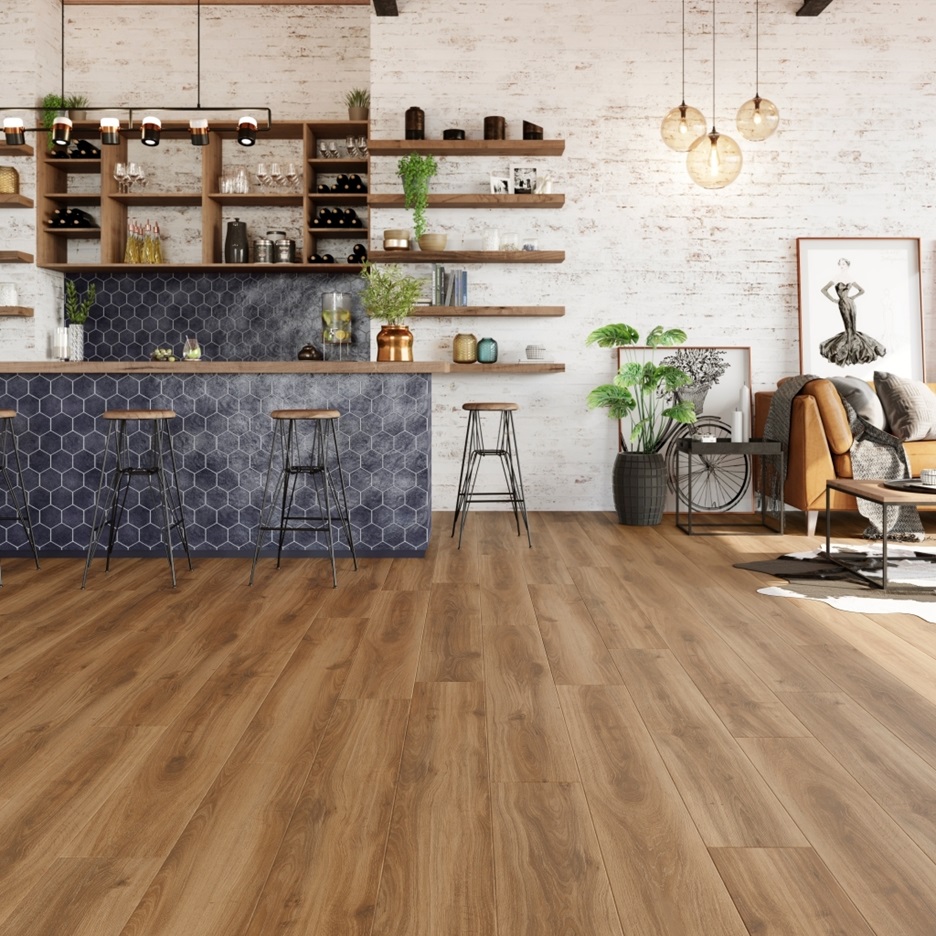
The short answer is yes! Vinyl plank, floating or glue down, can be installed in your kitchen. Vinyl plank can be installed virtually anywhere in your home. It is incredibly versatile because it is waterproof, stylish, and easy to maintain. That being said, there are a few things to take into consideration before you go ahead and upend your kitchen. In order to give you the right information for your installation, let’s look at the two types of LVP or Luxury Vinyl Plank.
Floating, Click Vinyl Plank
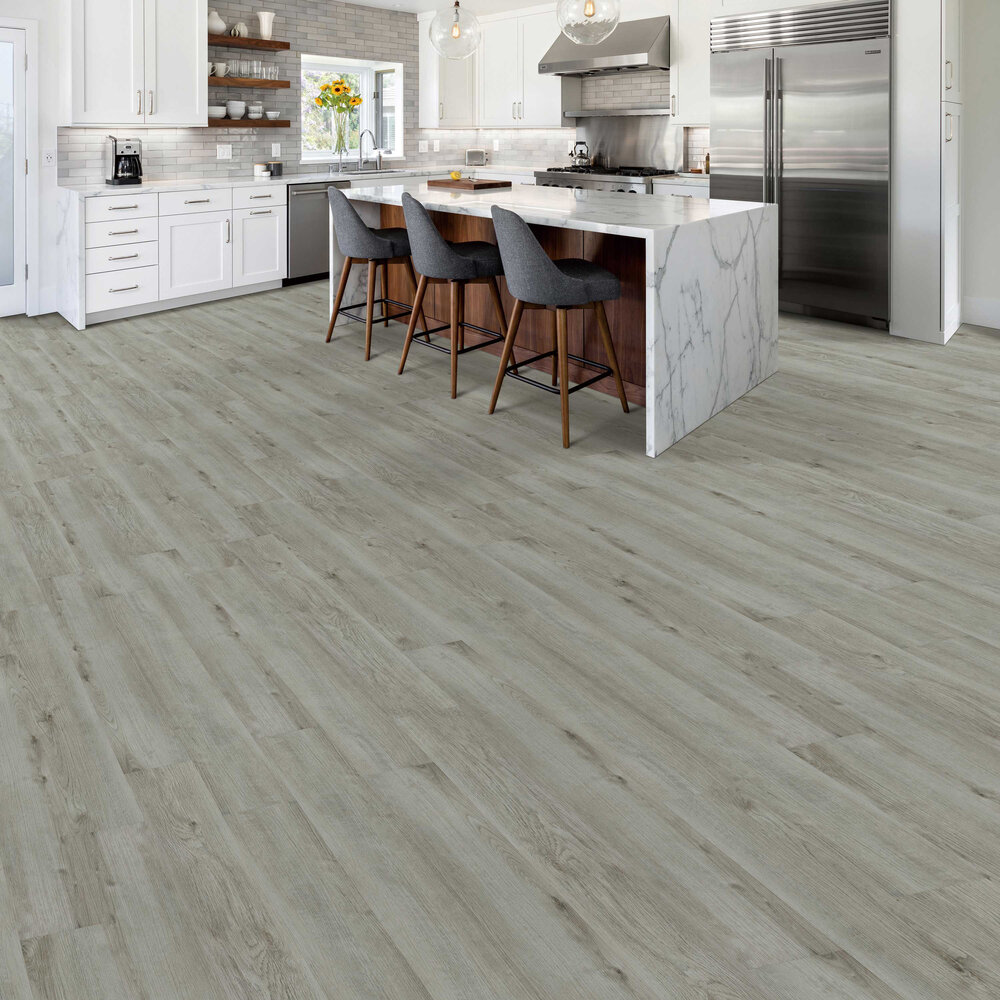
This is the most commonly used type of vinyl plank residentially, by professionals and by average Joes. Click plank, is extremely DIY friendly and available at most building supply and hardware stores. It also tends to be really affordable. Typically, as the price goes up, so does the quality, but this also varies depending on the manufacturer, and the construction of the product itself. Click plank has interlocking tongues that allow the planks to stay together without being adhered to the subfloor. Because they “float” above the subfloor, they can expand and contract with changes in heat and humidity levels.
| Benefits | Disadvantages |
| -Stylish and versatile: LVP can go in any room in the house, so that means you can carry this floor right into you living, dining, or any other connecting room. This creates a sleek and cohesive look that is very popular nowadays. -Safe: vinyl plank typically has more traction than a tile floor because of the wood style embossing on the top. -Not much subfloor preparation: floating vinyl plank can usually be installed over any existing hard surface flooring. There is no need to tear up your old linoleum or tile in order to install floating vinyl plank. -DIY: floating LVP is one of the easiest floors to install, with the simple locking joints and bounty of online resources. -Easy to clean: any cleaner that says it is safe for vinyl is good for vinyl plank. And you only really need to spot clean as messes occur. Frequent mopping is unnecessary. -Waterproof: vinyl is entirely waterproof, so if there is a spill or leak, the vinyl plank floor will not be damaged. | -Does not make your subfloor waterproof: while the flooring itself is waterproof, because it is floating, if there is a flood where water sits, it can get under the vinyl plank and cause water damage to your subfloor. -Should not be pinned down: floating vinyl plank is meant to shift with changes in climate, so if it is pinned down in any area with cabinets, or extremely heavy furniture items, it can cause the joints to separate, or even buckle and then crack. The bottom line, pinning floating LVP causes damage long term. -A level subfloor is needed: it doesn’t need to be perfect, but because floating LVP has rigid planks, if your subfloor has rolls or humps, the end joints could separate as you step onto those hollow spots. -Planks could become damaged if they are not protected: dents and scratches can appear if you don’t use felt pads on the bottom of your furniture, especially pieces that are constantly moving, like kitchen chairs and bar stools. |
Glue Down Vinyl Plank
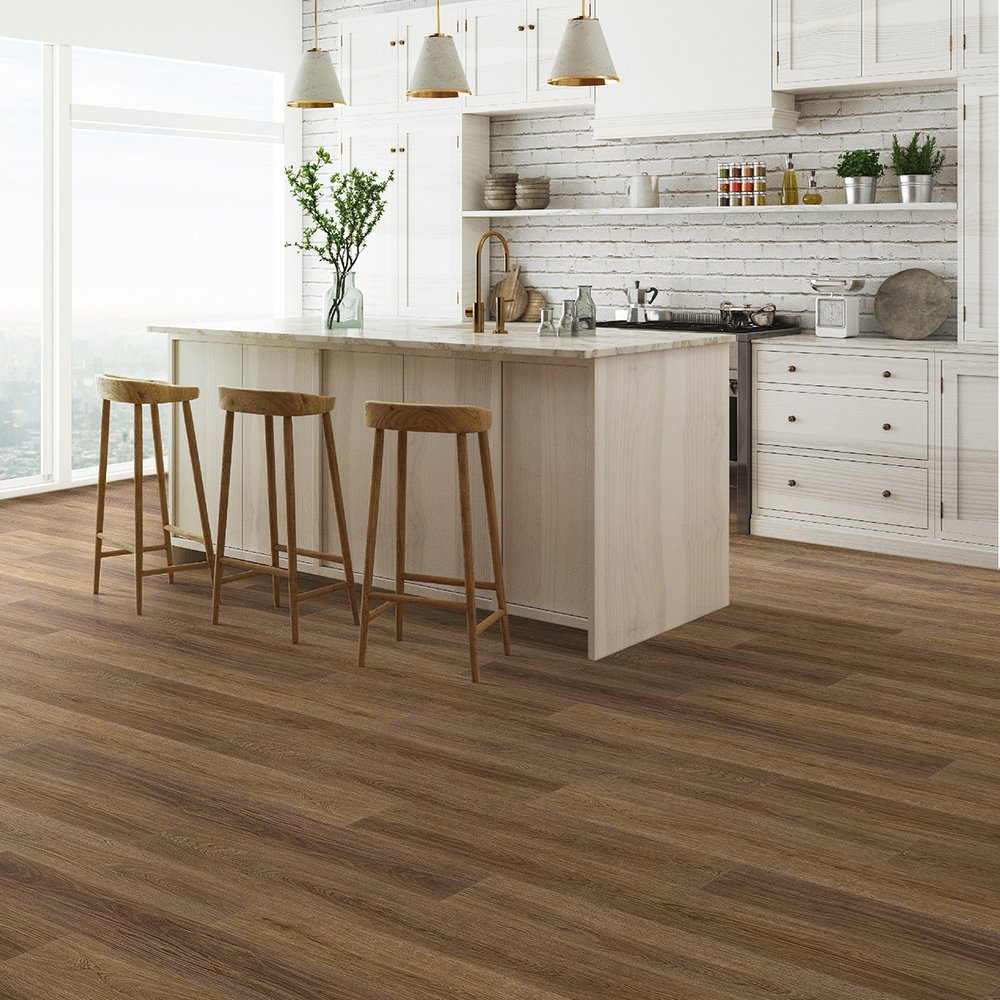
This type of vinyl plank sticks to your subfloor and is the perfect choice for older homes that have uneven floors, or that were never truly straight. A glue down vinyl plank comes in the normal shape of a wood plank, sometimes even with a beveled edge. These planks get adhered to the floor, butting up against each other. Because they stick, they mold to any rolls or humps in your subfloor, also making them great for basement floors. While this floor is also DIY friendly, it does involve glue, so a lot of people will let the professionals do this job.
| Benefits | Disadvantages |
| -Stylish and versatile: LVP can go in any room in the house, that means you can carry this floor right into you living, dining, or any other connecting room. This creates a sleek and cohesive look that is very popular nowadays. -Safe: vinyl plank typically has more traction than a tile floor because of the wood style embossing on the top. -Easy to clean: any cleaner that says it is safe for vinyl is good for vinyl plank. And you only really need to spot clean as messes occur. Frequent mopping is unnecessary. -Waterproof: vinyl is entirely waterproof, so if there is a spill or leak, the vinyl plank floor will not be damaged. Also, because it is glued down, it completely protects your subfloor from water damage. -Rolls with your floors: glue down LVP is flexible, so it is fantastic for uneven floors. It doesn’t have any locking systems to worry about cracking in hollow spots. Simply put, it becomes part of your subfloor. -Easy to repair a damaged board: the boards are not attached to each other, so if a board becomes damaged for any reason, you simply peel it up and replace it with a new board. -Can be pinned: this product can be pinned down under kitchen islands and cupboards because, like I said, the plank becomes part of your subfloor and doesn’t move. | -Planks could become damaged if they are not protected: dents and scratches can appear if you don’t use felt pads on the bottom of your furniture, especially pieces that are constantly moving, like kitchen chairs and bar stools. And because glue down LVP is flexible, it is also a bit softer than other products, making it more susceptible to dents. -Install can be messy: installing glue down vinyl plank requires you to use spread glue over your subfloor in large areas at a time, and this glue is sticky. This usually turns a lot of DIYers off of the product. -Gaps can appear over time: even though vinyl plank is waterproof, and doesn’t swell like hardwood, it does still fluctuate slightly. As such, gaps can pop up between planks occasionally. These gaps can collect dirt and snag if things are dragged over them. -Requires a clear subfloor: this type of LVP requires a clean subfloor |
All types of vinyl plank can go into a kitchen, it can flow from room to room, and it is all water proof. The only thing you have to worry about is keeping an eye out for leaks under your planks. As long as you take care of your floors, both glue down and floating LVP will be wonderful additions to any kitchen. All of our vinyl plank is high quality and beautiful. So come on in and look at our vinyl plank selection, we would love to help you figure out what to put under your feet in your kitchen!
 What's Under Your Feet?